


How it is made
Synthesis, freeze-drying, formulation and format: how a peptide becomes the vial, spray or strip on the shelf, and where the cost goes.
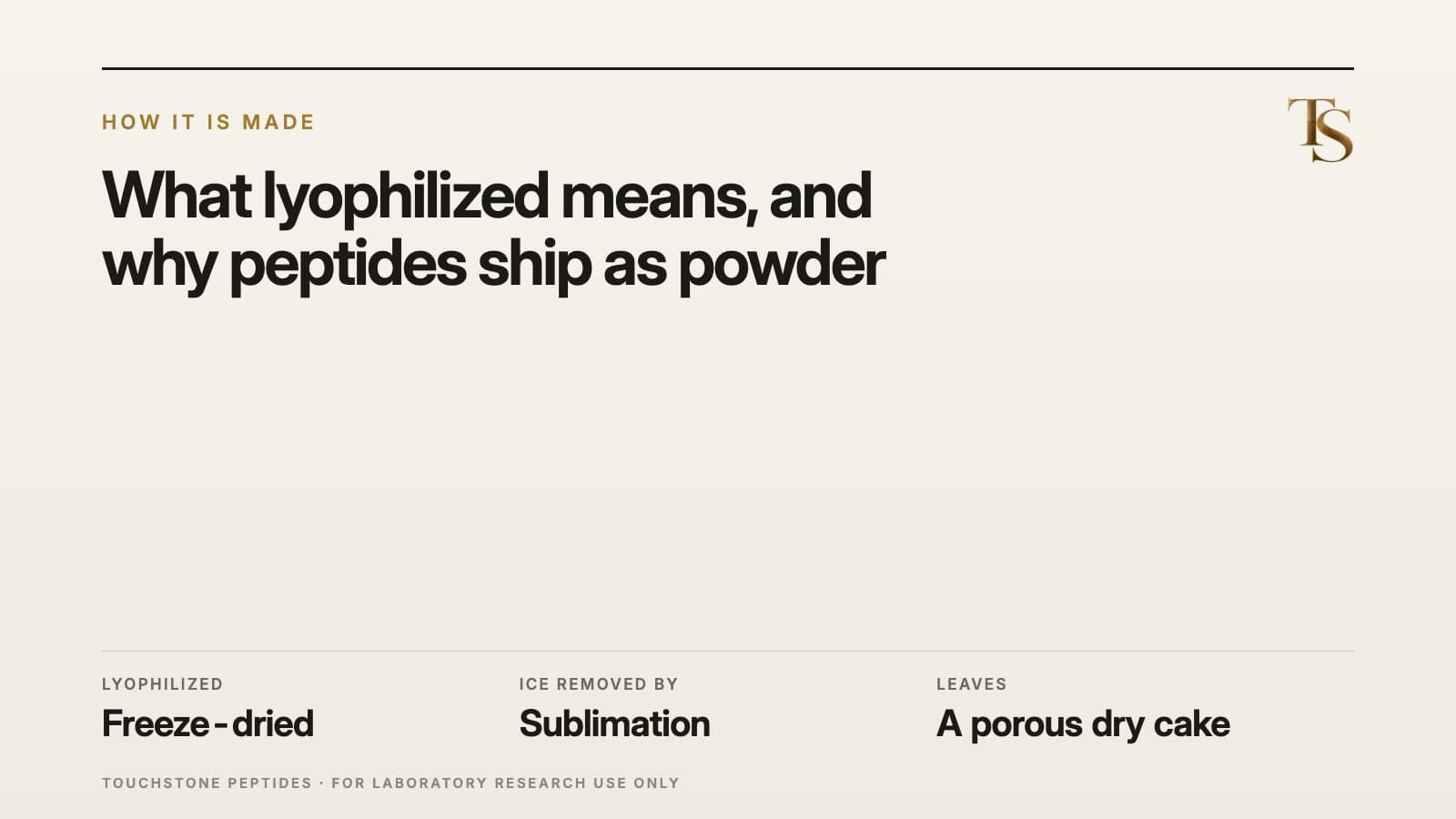 How it is madeWhat lyophilized means, and why peptides ship as powderFreezing, sublimation and desorption in plain terms: why a lyophilized cake looks the way it does, what residual moisture and a collapsed cake mean analytically, and why the label mass is nominal.
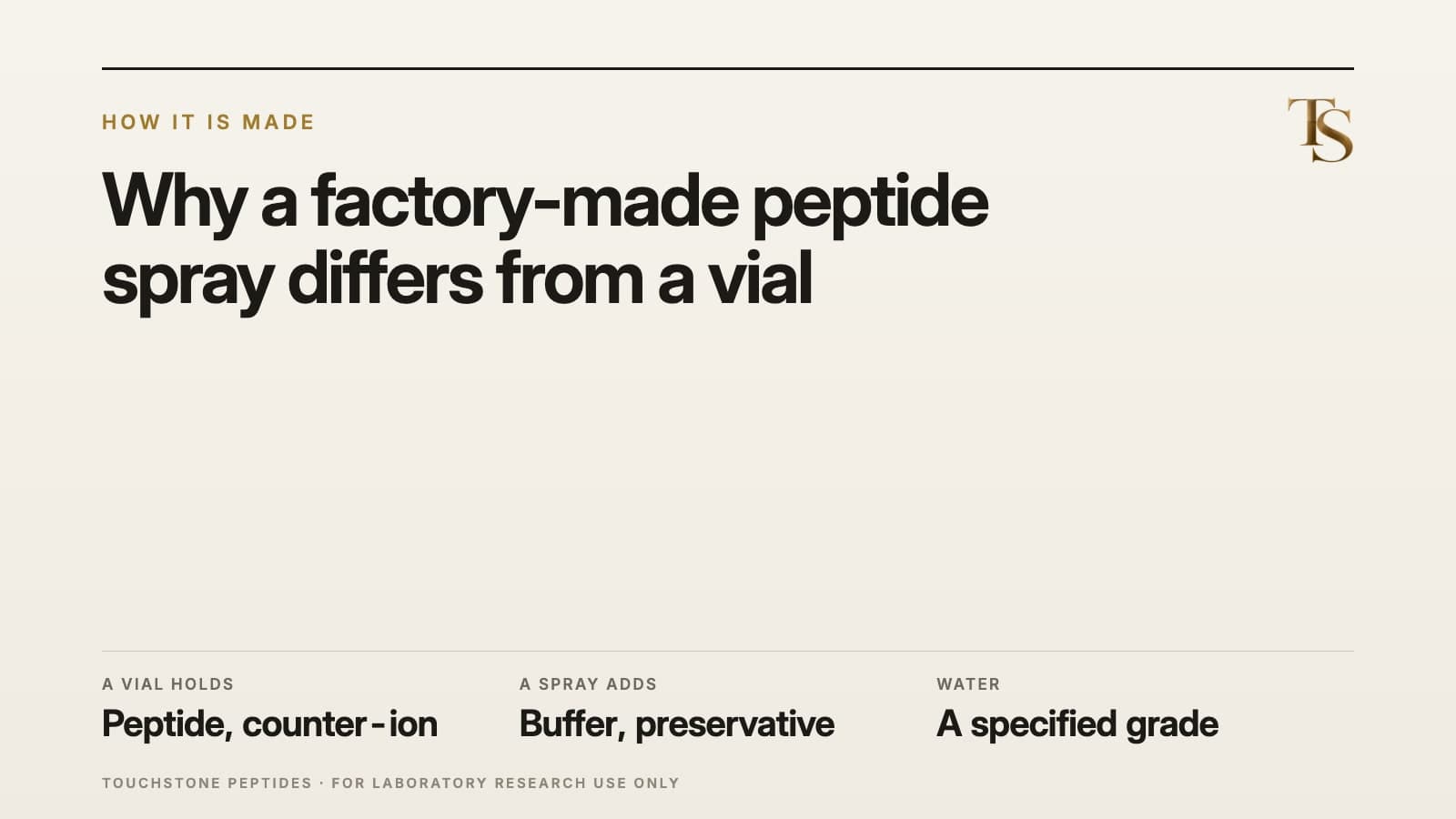 How it is madeWhy a factory-made peptide spray differs from a vialWhat a formulated aqueous peptide product contains (buffer, tonicity agent, preservative), how preservative efficacy is tested under USP <51>, why formulated products carry an in-use period, and what a dissolving strip is made of.
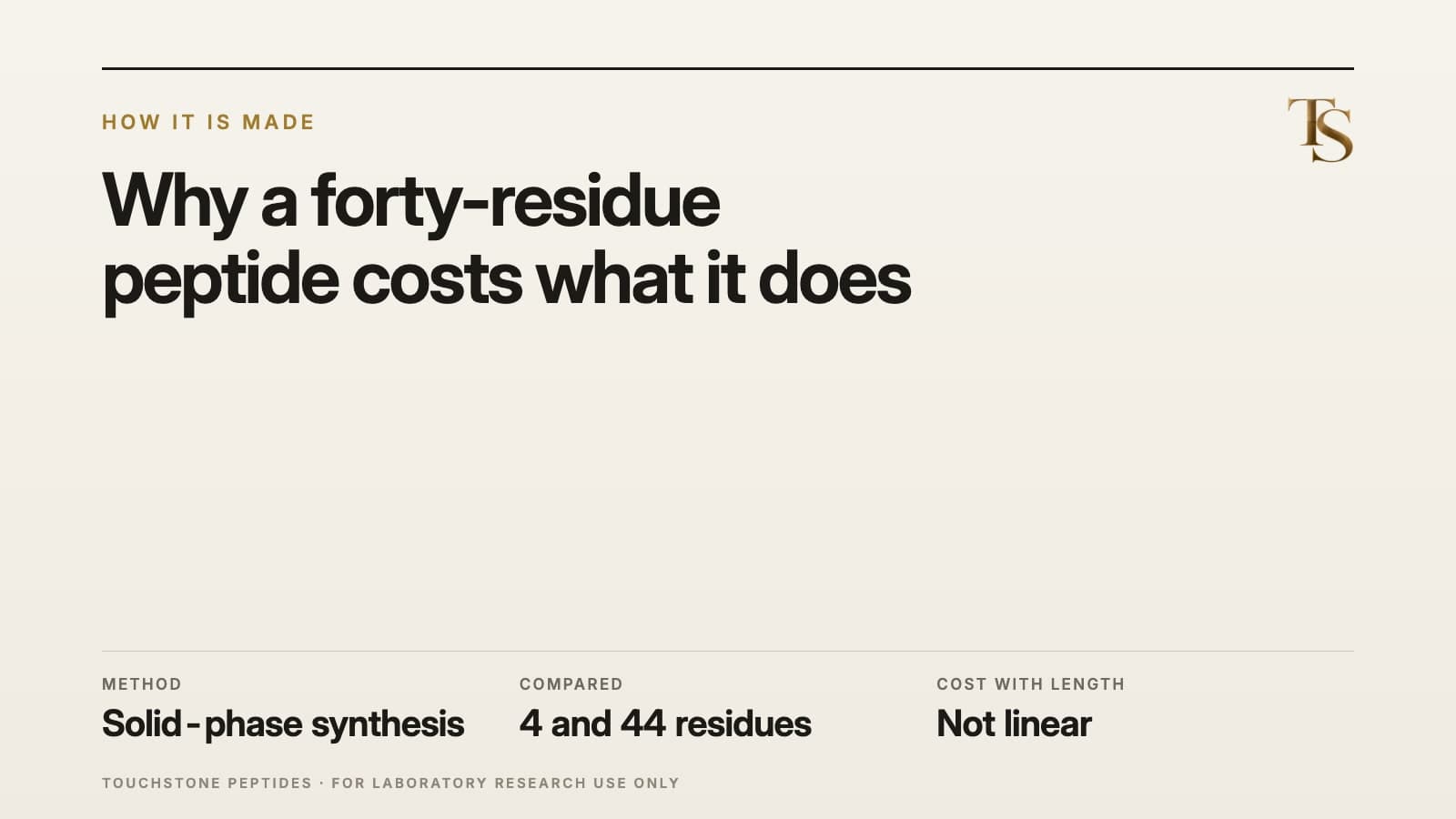 How it is madeWhy a forty-residue peptide costs what it doesSolid-phase synthesis is the same operation repeated once per amino acid. The arithmetic of that repetition is most of the price.
 How it is madeVial, spray or strip: what the format changesThe same compound in three packages is three different stability, handling and arithmetic problems.
Other shelves
- Reading the paperworkWhat each line on a certificate measures, and what a weak one leaves out.16 pieces
- HandlingStorage, stability and the arithmetic of a stock solution.7 pieces
- Where the line isWhat this site will and will not say about the material it sells, and why.13 pieces
- Sourcing and provenanceWhere research peptides come from, how to check a vendor with documents, and what an importer and a buyer are actually responsible for.5 pieces
- The moleculesWhat each peptide is: sequence, class, salt form, naming, and its regulatory status on a given date. Never what it does in a person.14 pieces
Nothing here is medical advice. Everything on this site is supplied for laboratory research use only.